
Mouse Secondary Antibodies

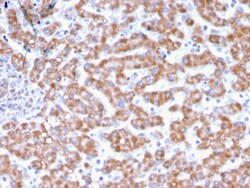
Biotium Prohibitin (Mitochondrial Marker)(PHB/3231), CF568 conjugate, 0.1mg/mL
Recognizes a protein of 30 kDa which is identified as Prohibitin, an evolutionarily conserved protein with homologues found in yeast to man. It is located in the inner membrane of mitochondria. Although prohibitin mRNA and protein expression occurs throughout the cell cycle, maximum levels are detected during the G1/S phase transition and minimum levels are seen in S phase and the G2/mitosis boundary. Prohibitin is located exclusively in the mitochondria with the highest concentration on the inner membrane. Prohibitin is an ideal mitochondrial marker. It shows antiproliferative activity and has been proposed to play a role in normal cell cycle regulation, replicative senescence, cellular immortalization, and tumor suppression. Primary antibodies are available purified, or with a selection of fluorescent CF Dyes and other labels. CF Dyes offer exceptional brightness and photostability. Note: Conjugates of blue fluorescent dyes like CF405S and CF405M are not recommended fo

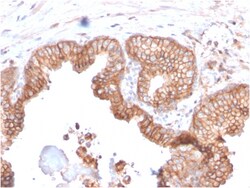
Biotium CD47 / IAP (Integrin Associated Protein)(CD47/2937), CF568 conjugate, 0.1mg/mL
This antibody reacts with Ig domain of CD47 protein. CD47, originally named integrin-associated protein (IAP), is a 50 kDa protein containing five membrane-spanning sequences and a short cytoplasmic tail. CD47 plays a role in both cell adhesion by acting as an adhesion receptor for THBS1 on platelets, and in the modulation of integrins. It is important in memory formation and synaptic plasticity in the hippocampus. CD47 may play a role in membrane transport and/or integrin dependent signal transduction. Primary antibodies are available purified, or with a selection of fluorescent CF Dyes and other labels. CF Dyes offer exceptional brightness and photostability. Note: Conjugates of blue fluorescent dyes like CF405S and CF405M are not recommended for detecting low abundance targets, because blue dyes have lower fluorescence and can give higher non-specific background than other dye colors.
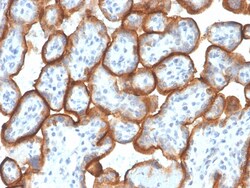
Biotium VISTA / B7-H5 / VSIR (Negative Regulator of Immune Response)(VISTA/3007), CF740 conjugate, 0.1mg/mL
VISTA / GI24 is a transmembrane protein expressed in bone, on embryonic stem cells (ESCs), and on tumor cell surfaces. On ESC s, Gi24 appears to positively interact with BMP-4, potentiating BMP signaling and the transition from an undifferentiated to a differentiated state. On tumor cells, Gi24 both promotes MT1-MMP expression and activity and serves as a substrate for MT1-MMP. This increases the potential for cell motility. Mature human Gi24 contains a 162aa extracellular region with one V-type Ig-like domain and a 96aa cytoplasmic domain. Human Gi24 undergoes proteolytic cleavage by MT1-MMP, generating a soluble 30 kDa extracellular fragment plus a 25-30 kDa membrane-bound fragment. VISTA is a negative checkpoint regulator and is expressed on myeloid cells, T-cells and human TILs (tumor infiltrating lymphocytes) on MDSCs (myeloid-derived suppressor cells) in the TME (tumor microenvironment). It is very likely both a ligand and receptor and is a promising target for cancer i
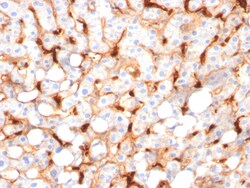
Biotium C1QB / Complement C1q B-Chain(C1QB/2966), 0.2mg/mL
Complement C1q B Chain (C1qb) is a subunit of C1q. C1q is composed of 6 polypeptide chains each of C1qa, C1qb, and C1qc. C1q is a component of the classical complement pathway, and thereby plays an important role in the immune response. Each C1q subunit contains an N-terminal collagen-like region and a C-terminal C1q globular domain. The presence of receptors for C1q on effector cells modulates its activity, which may be antibody-dependent or independent. Macrophages are the primary source of C1q, while anti-inflammatory drugs as well as cytokines differentially regulate expression of the mRNA as well as the protein. C1q deficiency is associated with lupus erythematosus and glomerulonephritis. Primary antibodies are available purified, or with a selection of fluorescent CF Dyes and other labels. CF Dyes offer exceptional brightness and photostability. Note: Conjugates of blue fluorescent dyes like CF405S and CF405M are not recommended for detecting low abundance targets,

Biotium Protocadherin FAT2 (FAT Atypical Cadherin 2) (8C5), CF568 conjugate, 0.1mg/mL
This antibody recognizes a protein of 480 kDa, which is identified as FAT2. The cadherins represent a family of Ca2 -dependent adhesion molecules that function to mediate cell-to-cell binding that is critical for the maintenance of structure and morphogenesis. Cadherins each contain a large extracellular domain at the N-terminus, which is characterized by a series of five homologous repeats, the most distal of which is thought to be responsible for binding specificity. The relatively short C-terminal intracellular domain interacts with a variety of cytoplasmic proteins, including beta-catenin, to regulate cadherin function. The cadherin superfamily includes cadherins, protocadherins, desmogleins and desmocollins. FAT2 (FAT tumor suppressor homolog 2) is a single-pass type I membrane protein that belongs to the protocadherin subfamily of cadherins. FAT2 contains one Laminin G-like domain, two EGF-like domains and 32 cadherin domains and is believed to function as a cell adhesi
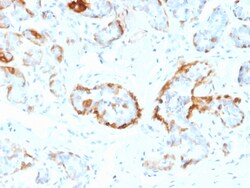
Biotium Crystallin Alpha B(CPTC-CRYAB-1), CF568 conjugate, 0.1mg/mL
Crystallins are the major proteins of the vertebrate eye lens, where they maintain the transparency and refractive index of the lens. Crystallins are divided into B-crystallin is associated with many neurological diseases, and a missense mutation in this gene has co-segregated in a family with a Desmin-related myopathy. Primary antibodies are available purified, or with a selection of fluorescent CF Dyes and other labels. CF Dyes offer exceptional brightness and photostability. Note: Conjugates of blue fluorescent dyes like CF405S and CF405M are not recommended for detecting low abundance targets, because blue dyes have lower fluorescence and can give higher non-specific background than other dye colors.
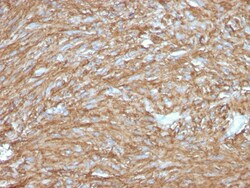
Biotium DOG-1 / TMEM16A (Gastrointestinal Stromal Tumor Marker)(DG1/2831R), CF488A conjugate, 0.1mg/mL
Expression of DOG-1 protein is elevated in the gastrointestinal stromal tumors (GIST's), c-kit signaling-driven mesenchymal tumors of the GI tract. DOG-1 is rarely expressed in other soft tissue tumors, which, due to appearance, may be difficult to diagnose. Immunoreactivity for DOG-1 has been reported in 97. 8 percent of scorable GIST's, including all c-kit negative GIST's. Overexpression of DOG-1 has been suggested to aid in the identification of GISTs, including Platelet-Derived Growth Factor Receptor Alpha mutants that fail to express c-kit antigen. The overall sensitivity of DOG1 and c-kit in GIST's is nearly identical: 94. 4% vs. 94. 7%. Primary antibodies are available purified, or with a selection of fluorescent CF Dyes and other labels. CF Dyes offer exceptional brightness and photostability. Note: Conjugates of blue fluorescent dyes like CF405S and CF405M are not recommended for detecting low abundance targets, because blue dyes have lower fluorescence and can
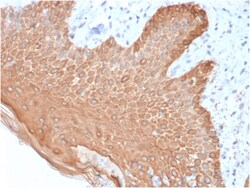
Biotium Cytokeratin, Multi (Epithelial Marker)(rKRT/457), Biotin conjugate, 0.1mg/mL
Twenty human keratins are resolved with two-dimensional gel electrophoresis into acidic (pI 6. 0) subfamilies. This antibody recognizes acidic (Type I or LMW) and basic (Type II or HMW) cytokeratins, including 59 kDa (CK4); 58 kDa (CK5); 56 kDa (CK6); 52 kDa (CK8); 56. 5 kDa (CK10); 53 kDa (CK13) and 45 kDa (CK18). This is a broad-spectrum antibody, which has been reported to differentiate epithelial tumors from non-epithelial tumors. Many studies have shown the usefulness of keratins as markers in cancer research and tumor diagnosis. Primary antibodies are available purified, or with a selection of fluorescent CF Dyes and other labels. CF Dyes offer exceptional brightness and photostability. Note: Conjugates of blue fluorescent dyes like CF405S and CF405M are not recommended for detecting low abundance targets, because blue dyes have lower fluorescence and can give higher non-specific background than other dye colors.
Biotium Cytokeratin 19(KRT19/799), CF740 conjugate, 0.1mg/mL
Recognizes a protein of 40 kDa, identified as cytokeratin-19 (CK19), which is expressed in sweat gland, mammary gland ductal and secretory cells, bile ducts, gastrointestinal tract, bladder urothelium, oral epithelia, esophagus, and ectocervical epithelium. Anti-CK19 reacts with a wide variety of epithelial malignancies including adenocarcinomas of the colon, stomach, pancreas, biliary tract, liver, and breast. Perhaps the most useful application is the identification of thyroid carcinoma of the papillary type, although 50%-60% of follicular carcinomas are also labeled. Anti-CK19 is a useful marker for detection of tumor cells in lymph nodes, peripheral blood, bone marrow and breast cancer.Primary antibodies are available purified, or with a selection of fluorescent CF Dyes and other labels. CF Dyes offer exceptional brightness and photostability. Note: Conjugates of blue fluorescent dyes like CF405S and CF405M are not recommended for detecting low abundance targets, b
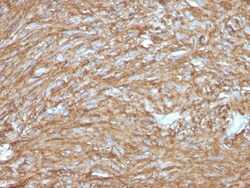
Biotium DOG-1 / TMEM16A (Gastrointestinal Stromal Tumor Marker)(DG1/2831R), 1mg/mL
Expression of DOG-1 protein is elevated in the gastrointestinal stromal tumors (GIST's), c-kit signaling-driven mesenchymal tumors of the GI tract. DOG-1 is rarely expressed in other soft tissue tumors, which, due to appearance, may be difficult to diagnose. Immunoreactivity for DOG-1 has been reported in 97. 8 percent of scorable GIST's, including all c-kit negative GIST's. Overexpression of DOG-1 has been suggested to aid in the identification of GISTs, including Platelet-Derived Growth Factor Receptor Alpha mutants that fail to express c-kit antigen. The overall sensitivity of DOG1 and c-kit in GIST's is nearly identical: 94. 4% vs. 94. 7%. Primary antibodies are available purified, or with a selection of fluorescent CF Dyes and other labels. CF Dyes offer exceptional brightness and photostability. Note: Conjugates of blue fluorescent dyes like CF405S and CF405M are not recommended for detecting low abundance targets, because blue dyes have lower fluorescence and can
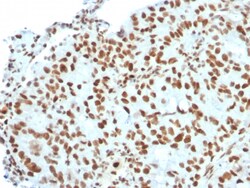
Biotium BMI1 (Oncogene and Stem Cell Marker)(BMI1/2823), 0.2mg/mL
The B cell-specific moloney murine leukemia virus integration site 1 (Bmi-1) is a transcriptional receptor of the polycomb gene family involved in several cellular processes including cell-cycle regulation, apoptosis, and maintenance of adult and neoplastic stem cells by providing self-renewal capacity. Further, Bmi-1 expression has been associated with malignant transformation, tumor progression, metastatic disease, and poor prognosis in human malignancies. Primary antibodies are available purified, or with a selection of fluorescent CF Dyes and other labels. CF Dyes offer exceptional brightness and photostability. Note: Conjugates of blue fluorescent dyes like CF405S and CF405M are not recommended for detecting low abundance targets, because blue dyes have lower fluorescence and can give higher non-specific background than other dye colors.
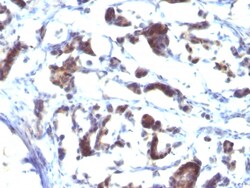
Biotium ZFYVE28 (Zinc Finger FYVE-type containing 28)(LST2/2426), CF488A conjugate, 0.1mg/mL
ZFYVE28 belongs to the lst-2 family. It contains 1 FYVE-type zinc finger. The FYVE-type zinc finger mediates the interaction with phosphatidylinositol 3-phosphate (PI3P) and localization to early endosome membranes when not mono-ubiquitinated at Lys-87. Mono-ubiquitination at Lys-87 prevents binding to phosphatidylinositol 3-phosphate (PI3P) and localization to early endosome membranes. ZFYVE28 is a negative regulator of epidermal growth factor receptor (EGFR) signaling. It acts by promoting EGFR degradation in endosomes when not mono-ubiquitinated. The FYVE domain has been identified in a number of unrelated signaling molecules. This protein functions to recruit SMAD2 to the transforming growth factor-beta receptor. The FYVE domain is required to maintain the normal localization of this protein but is not involved in mediating interaction with SMADs. Primary antibodies are available purified, or with a selection of fluorescent CF Dyes and other labels. CF Dyes offer except

FUJIFILM Biosciences Anti Mouse Podoplanin Monoclon
Podoplanin a type I transmembrane protein having a C-terminal transmembrane region is a glycoprotein with platelet-aggregating activity consisting of 162 and 172 amino acids in humans and mice respectively Podoplanin also called Aggrus or T1a is expressed in lymphatic endothelial cells but not in vascular endothelial cells and therefore has been utilized as a marker specific to lymphatic vessels In brain tumors expression of podoplanin has been known to be increased with increasing WHO grade II III and IV C-type lectin-like receptor 2 CLEC-2 acts as the receptor of podoplanin which contains PLAG2 and PLAG3 domains involved in the binding This antibody is available to detect mouse podoplanin
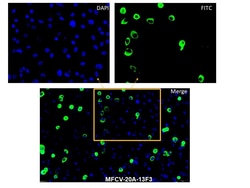
Immunology Consultants Human IgG1 Fc - Recombinant
This recombinant Human IgG1 Fc fragment offers a dependable, high‑quality antigen for immunoassay development, Fc receptor studies, and antibody engineering workflows. IgG1 is the most abundant and functionally active human IgG subclass, making its Fc region a critical component in therapeutic antibody design and analytical testing. Provided at 1 mg, this Fc fragment supports ELISA calibration, binding assays, and Fc‑specific antibody screening. Recombinant production ensures structural fidelity and consistent performance across applications. A valuable reagent for teams working on IgG1‑based therapeutics, Fc‑mediated effector function studies, or subclass‑specific assay validation.
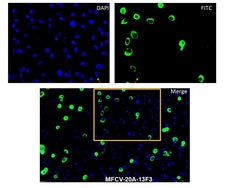
Immunology Consultants Human IgG4 ELISA Kit
This ELISA kit provides quantitative measurement of human IgG4, an immunoglobulin subclass associated with chronic antigen exposure, allergy research, and IgG4‑related disease. The assay offers high specificity and sensitivity for serum and plasma samples, supporting immunology studies, vaccine evaluation, and clinical research applications. With a pre‑coated microplate and optimized reagents, E‑80G4 delivers consistent, reproducible results suitable for longitudinal monitoring and comparative studies. Its robust performance makes it a valuable tool for characterizing IgG subclass distribution and immune response patterns.